
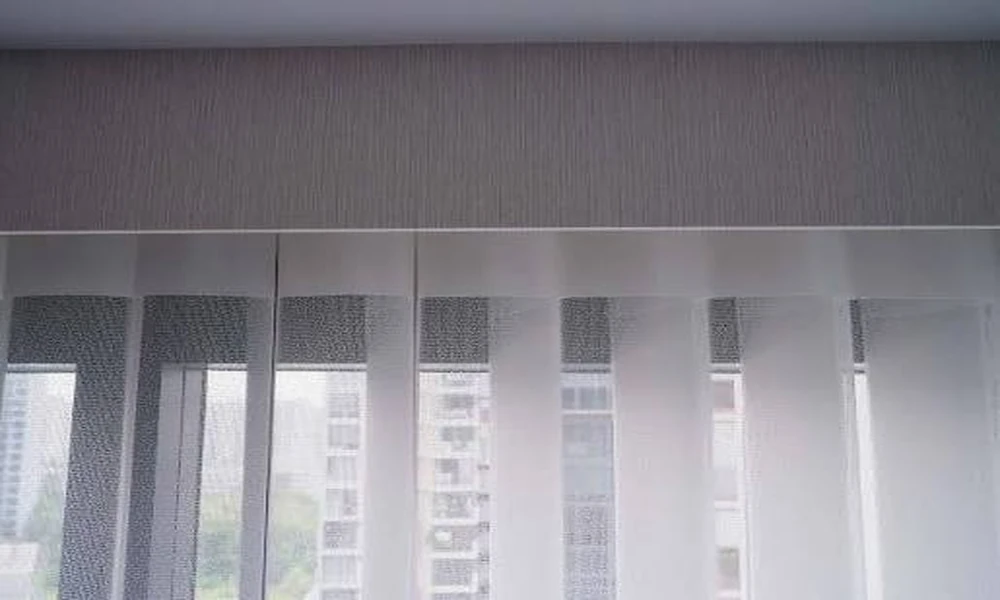

The horizontal slat blind survives because it does something no curtain can: it lets you keep the daylight while removing the glare, by tilting rather than by opening. In a country where the sun is high and hard for most of the day, that control is genuinely useful. Choosing venetian blinds singapore homes actually benefit from comes down to slat material, slat width and where in the flat they are going.
Tilt Is the Whole Point
A curtain gives you two states, open and closed. A venetian blind gives you a continuous range: fully open for view, tilted upward to bounce light onto the ceiling while blocking direct sun and sightlines from below, tilted downward for privacy from above, or closed. In an apartment overlooked by neighbouring blocks, the upward tilt is the setting most people end up using permanently, because it preserves brightness while removing the sensation of being observed.
Aluminium
The default for most applications. Light, inexpensive, available in a wide range of finishes, and resistant to the humidity that defeats other materials. Aluminium slats do dent if handled roughly, and cheaper blinds use thinner gauge that bends more easily, so check slat thickness rather than assuming they are all equivalent. Aluminium conducts heat, so a blind in direct sun will feel warm, though it still reduces the heat reaching the room.
Timber and Faux Wood
Real timber slats look considerably better than anything else in this category and belong in living and dining spaces where appearance matters. They are heavier, wider, and in this climate they can warp or discolour if exposed to sustained moisture, which rules them out of bathrooms and unprotected kitchen windows. Faux wood, typically a composite or PVC, imitates the look at lower cost and tolerates humidity far better, at the price of extra weight and a slightly less convincing grain.
Slat Width Changes Everything
Narrow slats around 25 millimetres suit small windows and give a fine, technical appearance with more slats stacking into a deeper headstack. Wider slats of 50 millimetres and above suit larger windows, give a cleaner look with fewer lines, stack more compactly and allow more view when open. Wide slats in a small window look heavy; narrow slats across a wide living room window look busy. Match the width to the opening rather than choosing on price alone.
Where They Suit and Where They Do Not
Venetians work well in bedrooms where light control matters, in studies where screen glare is the problem, in kitchens where a wipeable surface beats fabric, and in bathrooms provided the material tolerates moisture. They are less suited to very wide spans, where the blind becomes heavy and the tilt rod long, and to windows opened frequently, since slats rattle in a breeze. Suppliers of blinds in Singapore will usually suggest vertical blinds or panel systems for the widest openings.
Cleaning, Realistically
This is the honest drawback. Every slat has two surfaces, and in a city with construction dust and open windows they collect a film. A microfibre duster or a slat cleaning tool run along a closed blind takes a few minutes per unit and needs doing every few weeks, more often in kitchens where cooking residue makes dust stick. Aluminium and PVC can be wiped with a damp cloth; timber should not be. Anyone unwilling to do this should consider a roller or fabric option instead.
Mounting and Measuring
Inside mount, within the window reveal, looks neat and preserves the reveal’s depth but requires accurate measurement and leaves small light gaps at the edges. Outside mount, fixed to the wall above the opening, covers the gaps and blocks more light but projects into the room. Measure the width at three heights and the height at three points, since openings in older flats are rarely perfectly square, and use the smallest measurement for an inside mount.
Cords, Wands and Child Safety
Looped cords are a recognised strangulation hazard for young children, and this is worth taking seriously rather than treating as a formality. Options include cordless mechanisms, wand tilt controls, breakaway devices and cleats that keep cords secured out of reach and high on the wall. If there are children in the home, specify a cordless or wand-operated system at the outset rather than adding a tension device afterwards.
Combining Them With Curtains
Blinds and curtains are frequently treated as alternatives when they work better together. The blind handles daytime light and glare, tilting through the day as the sun moves, while a curtain on an outer track adds softness, absorbs sound, and provides full blockout at night. This layered arrangement is common in bedrooms, where the blind manages the morning and the curtain manages sleep. It requires enough depth in the reveal or a curtain box that accommodates both, so decide during a renovation rather than afterwards, when a shallow recess usually rules the combination out.
Buying Sensibly
Decide the room first, then the material that suits its humidity and cleaning demands, then the slat width to suit the opening, then the mount. Ask about slat gauge, the quality of the tilt mechanism and the ladder cords or tapes, since these are where cheap blinds fail. Chosen this way, venetian blinds singapore homeowners install give a level of daylight control that is difficult to achieve any other way, and they keep giving it for many years.
