
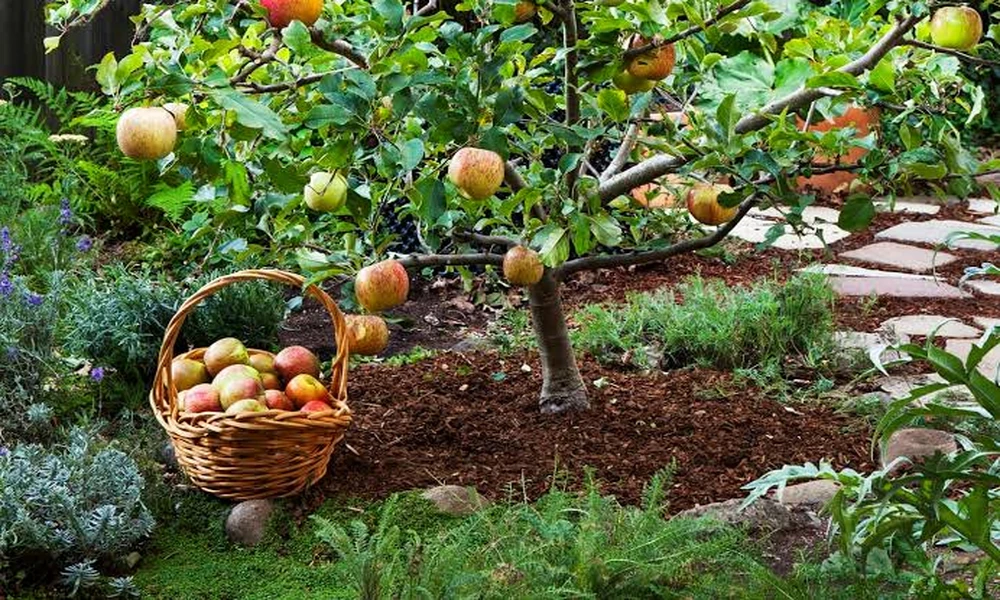

Rootstock is the quiet engineering beneath a fruit tree. It influences eventual height, spread, speed of establishment, cropping behaviour, and the amount of control a gardener needs to apply. The variety supplies the named fruit, but the rootstock helps decide whether that variety belongs in a lawn, border, allotment, trained line, or compact garden.
Five decisions bring the subject into focus: available space, soil and vigour, patience before cropping, the intended training system, and the match between the upper variety and its roots. None requires specialist vocabulary. Each asks the gardener to picture the tree several seasons ahead and to choose a natural fit rather than depend on repeated correction.
Fruit-Trees, a specialist fruit tree nursery, explains that rootstock should be treated as part of the garden design rather than a technical label added at the end. Mature size, soil strength, pruning reach, and the desired training form all belong in the same decision. A compact label alone does not settle the matter. The useful choice is the root system that supports the intended tree without demanding that annual pruning solve a permanent mismatch.
That perspective changes the order of selection. Instead of falling for a variety and then searching for somewhere to place it, the gardener writes a short site brief first. The rootstock becomes a practical answer to that brief.
The five decisions below are not a ranking. Together they describe the working relationship between roots, branches, soil, and gardener. The final section turns them into a simple record that remains useful when comparing several possible trees.
Decision One: Start With the Mature Space
The useful starting fact behind decision one: start with the mature space is that mature height and spread determine whether light, paths, boundaries, and neighbouring plants remain usable. For gardeners comparing rootstocks before choosing a variety, settling that fact early keeps attractive names and photographs in their proper place. Mature fit, rather than first-season appearance, becomes the standard against which the choice is judged.
Test the idea against standing in the garden with canes marking a future canopy on a low winter afternoon. That small exercise reveals requirements for space, support, timing or access that are easily missed during selection. Each requirement belongs in the brief before the tree arrives.
The costly shortcut is treating the size of a young nursery tree as evidence of its final footprint. Its weakness rarely appears all at once; it surfaces through missed watering, awkward cuts, wasted fruit or access that becomes steadily less pleasant. By then, decision one: start with the mature space has turned into a maintenance problem.
Before committing, complete this check: marking the likely canopy width on the ground and viewing it from doors, paths, and nearby beds. It exposes whether the site brief, likely workload and intended harvest point in the same direction. If they do not, the shortlist needs another pass.
Around decision one: start with the mature space, british weather adds movement to the calculation. Wet winters, dry establishment spells, late frost, and uneven summer growth affect establishment and annual care, while the same nominal height feels very different beside a shed, over a path, or in the centre of a lawn decides how quickly a weakness becomes visible. decision one: start with the mature space should still make sense when the season is awkward.
After weighing decision one: start with the mature space, the long-term test is whether the garden gains a rootstock category that fits without severe annual containment. If it does, the duties within establishment, framework building, pruning, cropping, and long-term renewal feel connected and worthwhile. decision one: start with the mature space has then contributed directly to a tree whose natural vigour supports the space instead of fighting it.
Decision Two: Let Soil Temper Vigour
Turn the concern into action by combining the rootstock description with drainage, fertility, competition, and the gardener’s willingness to improve the planting area. This creates a visible measure in the actual garden and separates a workable choice from one that succeeds only under ideal conditions.
The strongest answer to decision two: let soil temper vigour grows from a simple premise: rootstock vigour is expressed through the soil and moisture available to it. It places the tree within the actual site and household routine rather than within an idealised nursery image. That is the level at which long-term suitability can be compared honestly.
Consider comparing two planting positions after rain and again during a dry week. It places the tree among the movements and decisions of a working garden, where convenience and access have consequences. The right option should improve that routine rather than ask the routine to bend around it.
Risk enters when the gardener chooses assuming a size description behaves identically in rich loam, thin chalk, heavy clay, and a dry raised position. The apparent saving in space or effort is often repaid through years of corrective work. A sound brief makes that trade-off visible before commitment.
The British season rarely repeats neatly. Wet winters, dry establishment spells, late frost, and uneven summer growth alter growth and care, and grass competition and summer dryness can restrain a tree while fertile cultivated ground pushes the same combination harder further shapes the outcome. The plan therefore needs enough margin to absorb variation without losing its purpose.
Over time, the plan should reveal growth that is energetic enough to establish but not constantly excessive. The sequence of establishment, framework building, pruning, cropping, and long-term renewal then becomes a useful review cycle rather than a series of corrections. It keeps decision two: let soil temper vigour aligned with a tree whose natural vigour supports the space instead of fighting it.
Decision Three: Balance Early Crops With Framework
One assumption deserves particular suspicion: treating the earliest possible crop as the only sign that a rootstock is performing well. It shifts responsibility from the present decision to a future gardener who must repeatedly prune, protect or reorganise the space. A better answer removes that burden at source.
In decision three: balance early crops with framework, before comparing varieties, pause over one physical truth: precocity is useful only when the young tree also builds roots and branches capable of carrying future harvests. It changes how decision three: balance early crops with framework works in an ordinary garden and what the gardener must be able to maintain. A sound shortlist begins with that constraint and lets cultivar preference follow.
Reality enters the comparison through removing part of an early crop so a newly planted tree keeps making balanced growth. The example connects the proposed tree to a household habit instead of treating it as a self-contained garden feature. It also exposes which compromises would be repeated year after year.
Around decision three: balance early crops with framework, local conditions prevent the answer from becoming a formula. With wet winters, dry establishment spells, late frost, and uneven summer growth, the significance of early blossom is exciting but young fruit, dry soil, and limited roots can compete for the same reserves changes from garden to garden. Resilience comes from acknowledging that interaction, not from pretending it can be designed away.
The decision becomes testable through deciding how much patience the garden allows and how early fruit will be managed during establishment. A clear result prevents attractive secondary details from displacing the conditions that determine long-term fit. It also provides a useful record for later review.
After weighing decision three: balance early crops with framework, a successful decision leaves the garden with a tree that begins cropping without sacrificing a durable framework. The recurring work of establishment, framework building, pruning, cropping, and long-term renewal remains proportionate, and each task supports a tree whose natural vigour supports the space instead of fighting it. That relationship is the clearest measure of long-term value.
Decision Four: Match the Training and Pruning Method
Around decision four: match the training and pruning method, conditions on the ground complete the comparison. Wet winters, dry establishment spells, late frost, and uneven summer growth shape the annual rhythm, while summer pruning, winter framework work, and branch tying need safe access as the tree becomes established can magnify or soften their effect. That context helps decision four: match the training and pruning method remain realistic for a British audience.
In decision four: match the training and pruning method, one fact gives this part of the decision its scale: bush trees, cordons, espaliers, fans, and stepovers ask different things from rootstock and gardener. It affects the tree, the surrounding garden, and the time needed for annual care. Once it is clear, decision four: match the training and pruning method becomes a question of fit rather than optimism.
For decision four: match the training and pruning method, the choice is easier to judge through reaching every future cut from a stable path rather than stretching across a border. Seen in that setting, the tree must share space with people, crops, weather and available time. Suitability becomes a lived condition rather than a label.
Within decision four: match the training and pruning method, a fragile version of the plan relies on choosing a compact rootstock while leaving the future framework and pruning rhythm undefined. It tends to work only while weather, time and enthusiasm are unusually generous. Normal difficult weeks then reveal the hidden cost.
Resolve uncertainty through drawing the intended shape, support points, working height, and pruning access before ordering. The outcome should either confirm the arrangement or prompt a change before the tree arrives. In both cases, decision four: match the training and pruning method benefits from an explicit decision rather than a hopeful assumption. Once the evidence is assembled, the right moment to buy fruit trees is when the site brief, the likely workload, and the intended harvest all point in the same direction.
Look for a rootstock and form that respond predictably to the chosen training system as the practical finish. It should remain visible through establishment, framework building, pruning, cropping, and long-term renewal, when weather and workload expose weak assumptions. A tree that supports a tree whose natural vigour supports the space instead of fighting it under those conditions is genuinely well placed.
Decision Five: Check Variety and Rootstock Together
At the centre of decision five: check variety and rootstock together sits a practical condition that cannot be edited later: the upper variety contributes its own growth habit, cropping style, and response to local conditions. Gardeners gain more by acknowledging it now than by compensating with pruning or watering after planting. The mature tree, not the delivery-day tree, is the relevant picture.
For decision five: check variety and rootstock together, imagine the garden several seasons on and then try comparing two preferred varieties on the same rootstock and asking which framework is easier to manage. The picture is valuable because it includes mature growth and the jobs surrounding it. A plan that works there has stronger foundations than one designed only for planting day.
Seasonal pressure provides another test: wet winters, dry establishment spells, late frost, and uneven summer growth. At the same time, a naturally strong variety and a restrained variety do not express the same rootstock in exactly the same way. A choice that tolerates both influences is more likely to remain useful without turning every difficult spell into a rescue operation.
The plan weakens through assuming the rootstock alone guarantees a precise final size or identical performance across varieties. Consequences arrive quietly-jobs are delayed, fruit goes unused, or the framework is repeatedly forced back into bounds. Those symptoms show that decision five: check variety and rootstock together was never fully resolved.
After weighing decision five: check variety and rootstock together, handled with care, this part of the brief produces a whole-tree choice rather than two labels considered separately. It gives the tree a coherent role across establishment, framework building, pruning, cropping, and long-term renewal and prevents decision five: check variety and rootstock together from becoming detached from a tree whose natural vigour supports the space instead of fighting it. The result remains easy to explain after the novelty has passed.
Ground the choice by reading vigour, habit, pollination, crop use, and rootstock as one combined specification. The exercise is simple enough to repeat yet strong enough to disqualify a poor position. That balance is exactly what decision five: check variety and rootstock together requires.
Turn the Five Decisions Into a Site Brief
Test the idea against returning to the notes after the first growing season and checking whether the original assumptions were accurate. That small exercise reveals requirements for space, support, timing or access that are easily missed during selection. Each requirement belongs in the brief before the tree arrives.
The costly shortcut is keeping the observations in memory and changing priorities each time a new variety appears. Its weakness rarely appears all at once; it surfaces through missed watering, awkward cuts, wasted fruit or access that becomes steadily less pleasant. By then, turn the five decisions into a site brief has turned into a maintenance problem.
The decision becomes more precise when a written brief prevents attractive details from displacing the conditions that determine long-term fit. For gardeners comparing rootstocks before choosing a variety, this is not a minor technical detail but part of the future working arrangement. It should shape the shortlist before crop promises or decorative appeal are allowed to dominate.
Use a direct test: recording space, soil, training form, crop expectations, access, and acceptable workload on one page. The answer should be specific enough to change the shortlist or the planting position. It gives turn the five decisions into a site brief a threshold based on evidence rather than preference.
Around turn the five decisions into a site brief, allow for unfavourable weeks as well as ideal ones. Wet winters, dry establishment spells, late frost, and uneven summer growth can interrupt routines, while the brief also helps a nursery understand what the gardener needs without prescribing a variety too early influences recovery and consistency. The strongest choice remains understandable and manageable through both.
The intended outcome is a shortlist that remains consistent and easy to explain. It keeps turn the five decisions into a site brief connected to a tree whose natural vigour supports the space instead of fighting it throughout establishment, framework building, pruning, cropping, and long-term renewal.
