
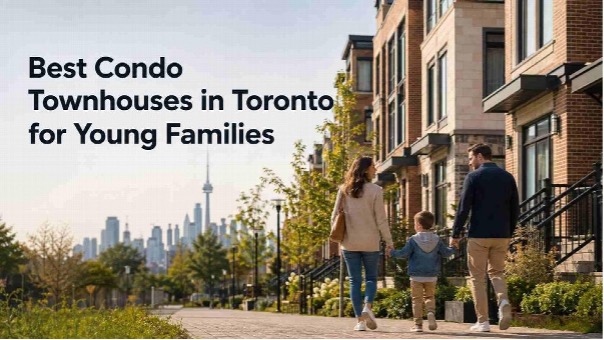

Executive Summary: Finding the Right Toronto Condo Townhouse for Your Family
Choosing a family home requires more than comparing bedrooms and asking prices. This guide explains how to verify school eligibility and neighbourhood safety, test commute times, and assess whether the layout will support your family’s changing needs. When comparing condo townhouses Toronto buyers should also calculate total monthly costs and investigate the corporation’s finances. You will learn how to identify hidden ownership risks and build a shortlist based on evidence rather than listing photos.
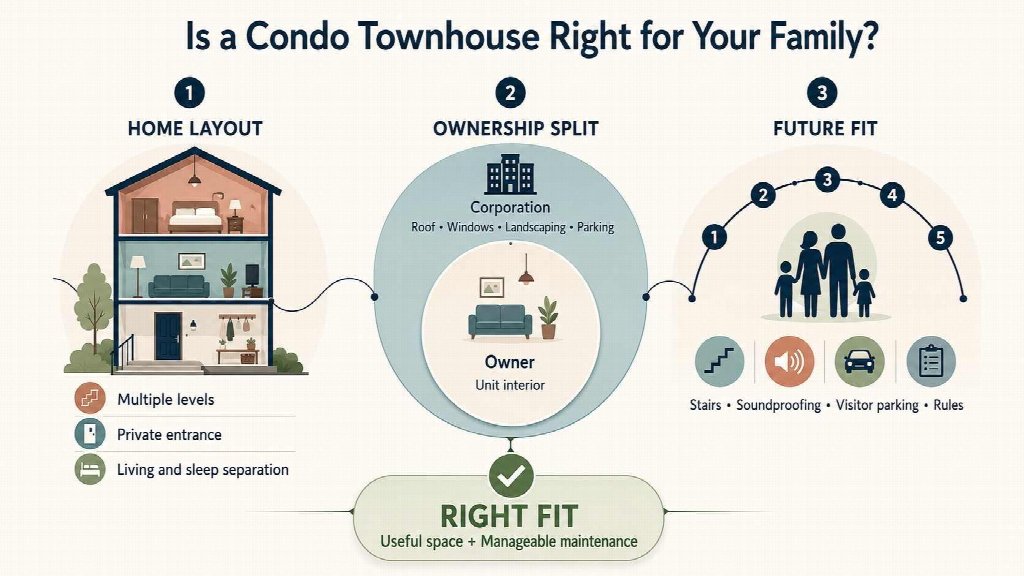
Is a Condo Townhouse Right for Your Family?
A condo townhouse can suit buyers who want multiple levels, a private entrance and more separation between sleeping and living areas without taking responsibility for every exterior task. However, ownership boundaries vary. The corporation may maintain roofs, windows, landscaping or underground parking, while the owner handles everything inside the unit. Confirm these repair responsibilities before comparing the monthly fee with a freehold property. Families should also consider whether corporation rules restrict pets, barbecues, renovations or outdoor storage.
Think beyond the current stage of family life. Stairs may become inconvenient with a baby, while limited soundproofing or visitor parking can create daily friction. During a search for condo townhouses Toronto buyers should therefore test the layout, access and rules against their likely five-year needs. The right choice provides manageable maintenance, useful space and enough control for everyday family routines.
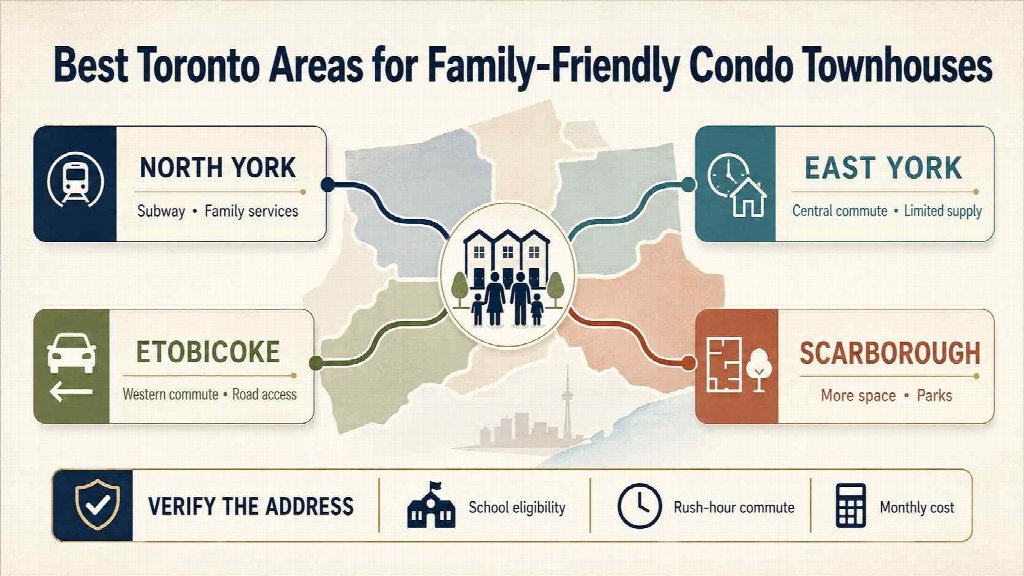
Best Toronto Areas for Family-Friendly Condo Townhouses
A search for condo townhouses Toronto families can buy should begin with commute and school boundaries, not neighbourhood reputation. Compare each address using rush-hour travel time and the designated school, since nearby schools may not serve that property.
North York and East York
North York can suit households needing subway access, shopping and established family services, although prices and unit sizes vary considerably by pocket. East York may offer a shorter central commute and a residential setting, but limited townhouse supply can increase competition. Test door-to-door transit on a weekday and confirm childcare availability before prioritizing either area.
Scarborough and Etobicoke
Scarborough may provide more interior space and access to parks at certain price points. Etobicoke can work well for western commutes and drivers, although transit convenience differs by address. Searches for family townhomes Toronto buyers can afford should compare usable floor area with the total monthly cost, not price alone.
No area is automatically right for every family. Check police data at the neighbourhood level, visit after dark and verify school eligibility before building your property shortlist or booking a second viewing.
What Makes a Condo Townhouse Work for a Young Family?
A family-friendly layout should reduce daily friction rather than simply provide more rooms. During a viewing, follow the route from the entrance to the kitchen, bedrooms and parking. This reveals whether everyday movement and parental supervision will remain practical.
Check the following features:
-
A main-floor bathroom and clear sightlines to play areas
-
Secure stroller storage without blocking exits
-
Bedrooms large enough for furniture, not just floor-plan labels
-
Safe stair geometry, railings and landings
-
Direct access to parking, garbage collection and outdoor space
-
Limited sound transfer through shared walls and floors
When assessing condo townhouses Toronto families should also test mobile reception, water pressure and natural light with doors closed. Visit during an active time of day to notice traffic noise and shared-space congestion.
The strongest option supports present routines while retaining flexible space for remote work, another child or changing care needs.
What Will a Toronto Condo Townhouse Really Cost Each Month?
The mortgage payment is only the starting point. Build a monthly worksheet that includes property tax, condo fees, unit insurance, utilities, parking and an allowance for interior repairs. Listings for family townhomes Toronto buyers see online may show the maintenance fee without explaining what it covers. Request the current budget and utility history to calculate a reliable all-in monthly cost and identify metered services separately.
Next, test whether the budget survives a higher renewal rate, a fee increase and an unexpected repair. Ask who pays for windows, doors, roofs and plumbing outside the unit boundary. When comparing condo townhouses Toronto families should examine the corporation’s recent fee history alongside the reserve fund study. A lower fee is not better if it reflects deferred maintenance or creates greater special-assessment risk.
What Should You Check Before Making an Offer on a Condo Townhouse?
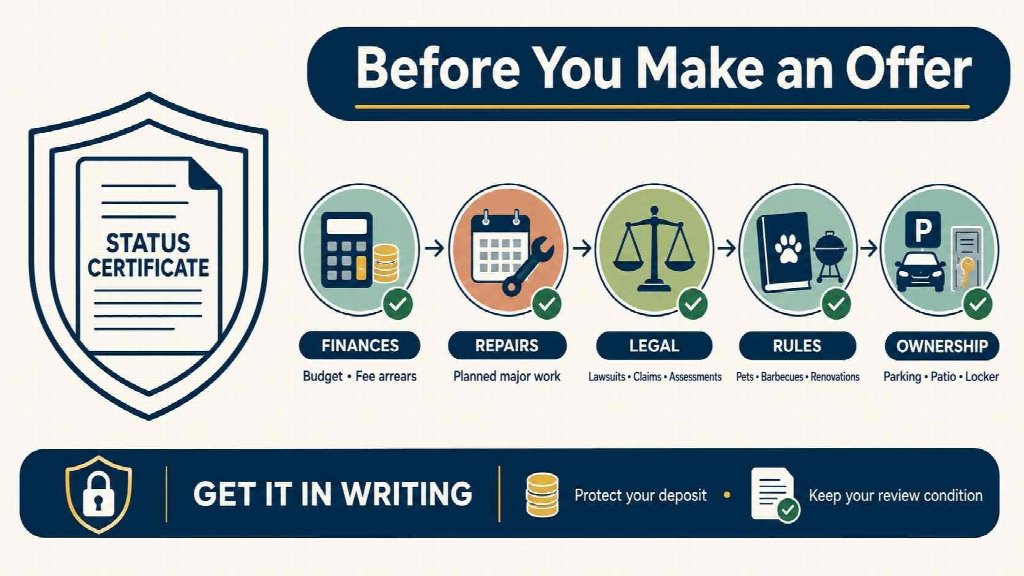
Before you fall in love with the kitchen or start planning furniture, pause and find out what comes with the unit. Have your lawyer review the status certificate and flag anything that could limit how your family uses the property. Parking spots, patios and lockers may look private, but their legal ownership can be different from what the listing suggests.
Look closely at:
-
The corporation’s budget and unpaid condo fees
-
Major repairs planned for the next few years
-
Current lawsuits, insurance claims or special assessments
-
Rules for pets, barbecues, play equipment and renovations
-
Written approval for structural or plumbing changes
If the paperwork raises a question, get the answer in writing before removing conditions. When viewing condo townhouses Toronto buyers should favour clear records over a seller’s reassurance. A good offer protects both your deposit and your room to reconsider.
Final Family Checklist: Is This Townhouse Worth a Second Visit?
A second visit should settle something. While comparing condo townhouses Toronto families may be tempted to return simply because one home felt right. Instead, decide what you still need to learn. Go back when the street is busier, bring a tape measure and see whether the home still works without the quiet first-viewing atmosphere or polished listing presentation.
Use the visit to check:
-
Whether the stroller fits through the entrance
-
How bedrooms sound with the doors closed
-
Where groceries, bikes and winter gear would go
-
How long the walk from parking takes
-
Whether traffic or shared areas become noisy after work
Some family townhomes Toronto buyers like will lose their appeal under this closer look. That is useful. A worthwhile second visit should close a specific information gap and leave you with fewer doubts, not greater emotional attachment.
FAQs About Family Townhomes in Toronto
Is a Nearby School Guaranteed?
No. When comparing family townhomes Toronto buyers must verify the exact address through the school board. Proximity does not guarantee catchment eligibility.
What Do Condo Fees Usually Cover?
Coverage varies. Fees may include landscaping, snow removal or exterior repairs. Check the operating budget and identify which utilities remain separate.
Can a Condo Townhouse Restrict Pets?
Yes. The declaration or rules may limit an animal’s number, size or type. Review all pet restrictions before making a conditional offer.
What Is the Most Important Document to Review?
Start with the status certificate package. For condo townhouses Toronto buyers should ask a lawyer to examine the corporation’s finances, rules and special assessments before the review condition expires.
Resources
https://www.ontario.ca/
https://www.cmhc-schl.gc.ca/
https://data.tps.ca/
