
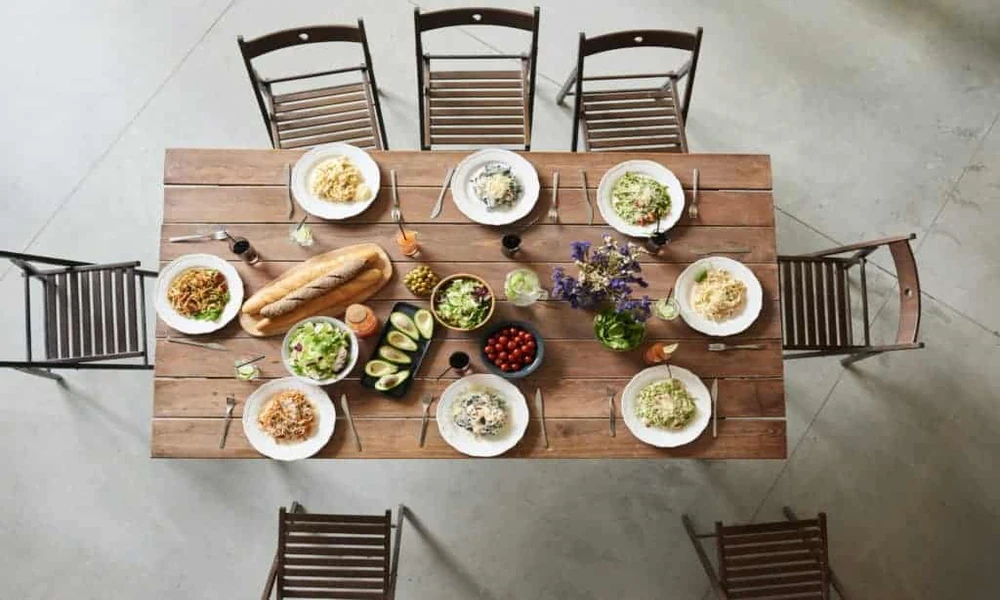

Family-style service works when guests can tell what they are passing. With several pierogi fillings, separate serving dishes, clear descriptions and utensils that stay with each dish are more useful than an impressive mixed platter. Establish the food’s identity before it begins moving around the table, then keep that information available as people serve themselves.
Choose separate dishes for meaningful differences
Decide which differences need to remain obvious. Potato and cheddar, chicken and onion, and a filling containing pork should not become an undifferentiated pile. Even when everyone can eat all the options, people may want a particular one. A shared meal should not turn choosing dinner into a guessing game.
Use dishes that are easy to distinguish and comfortable to pass. They do not need to match. A shallow oval dish and a round bowl may be easier to remember than two identical platters. If the table is small, use modest serving dishes and keep any additional food appropriately held until needed rather than sacrificing clarity to a huge display.
Think through the refill before the first serving. If the oval dish starts with chicken-and-onion dumplings, keep that identity when more food is added. Switching the contents after guests learn the arrangement can undo the benefit of separate dishes. A refill should extend the original choice, not require everyone to relearn the table.
Do not rely on a garnish as the sole identifier. A guest may move it, skip it or assume it is decoration. The same problem applies to remembering that one filling began on the left side of a mixed platter. Once food is passed and portions are taken, those distinctions become hard to maintain.
State the filling before passing the plate
Use an ordinary description the first time a dish is offered. “These are the mini potato-and-cheddar pierogies” says more than a playful product name alone. A person unfamiliar with the brand should be able to choose without asking for a translation. The name can follow the description if someone wants to remember it for a future purchase.
The descriptions on Holy Perogy’s Bronx page help a host prepare those introductions. Poppin’ Cheddar Bites contains potato and cheddar in a mini format; Cheeky Chicken Bites is a mini chicken-and-onion dumpling. Similar size does not make their contents interchangeable, so describe the filling rather than simply calling both “the bites.”
Introduce a pork-containing choice just as directly. Fully Loaded Potato includes potato, cheddar, smoked pork bacon, onion, butter and sour cream. Saying only “loaded potato” may leave a guest to infer what loaded means. The most useful description names the ingredient that could change someone’s decision.
Repeat the explanation for anyone who arrives after the first introduction. A late guest may join during conversation and reach for the nearest dish without having heard the earlier description. Briefly orient them instead of expecting another guest to relay it accurately. Small written labels can help if your gathering is especially conversational, though a seated dinner often needs only a clear introduction and consistent dishes.
Keep preference talk welcoming. A guest can choose the cheddar without explaining why they passed on the mushroom option. The host’s role is to make choices understandable, not to encourage everyone to sample every dish. Passing a plate along should be as ordinary as taking a portion.
Keep serving utensils with their dishes
Give each dish a suitable serving utensil before it reaches the table. Guests should not need to borrow the one from another filling or use personal utensils to move food. Put the utensil where it can rest with its dish without balancing precariously over the edge. This is a small setup decision that pays off each time the plate is passed.
Explain the arrangement casually if needed: the spoon stays with the round dish, and the other utensil stays with the oval one. If a utensil is dropped or misplaced, replace it with a clean one. Do not treat keeping the table tidy as more important than keeping the arrangement understandable.
For an allergy or another specific dietary requirement, discuss preparation and service with the guest in advance. Separate platters alone are not a complete plan for that situation. The guest needs accurate ingredient information and an arrangement that addresses their actual needs, which may include food prepared and served separately from the family-style dishes.
Consider the route food takes around the table. A heavy platter may be easier for the host to offer than for guests to pass across glasses and condiments. Leave enough room to set a dish down before serving from it. Clear serving space supports the food labels: people can take a moment to identify the dish rather than grabbing something while balancing it in midair.
Save the packages until questions are answered
A plain-language introduction is useful, but it does not contain the complete ingredient list. Keep the original packages accessible in the kitchen during the meal. If someone asks about an ingredient, consult the relevant label instead of trying to remember from the product name or a brief online description.
This also helps anyone who enjoyed a variety and wants to identify it later. Show them the actual name and format rather than offering a loose description that could lead to a different purchase. If the package contains unused frozen product, retain its instructions and storage information with it.
Keep your arrangement consistent as dinner winds down. Avoid combining the remaining contents of different dishes simply to clear one bowl if doing so would lose useful ingredient information. When food is stored, identify it clearly and follow appropriate storage guidance. A less crowded table is not worth creating an unknown mixture for the next meal.
At a comfortable family-style dinner, guests can listen to the conversation and still understand the food in front of them. Give each filling a clear place, a truthful description and a utensil of its own. Then passing a dish becomes an invitation to choose rather than a request to guess.
