
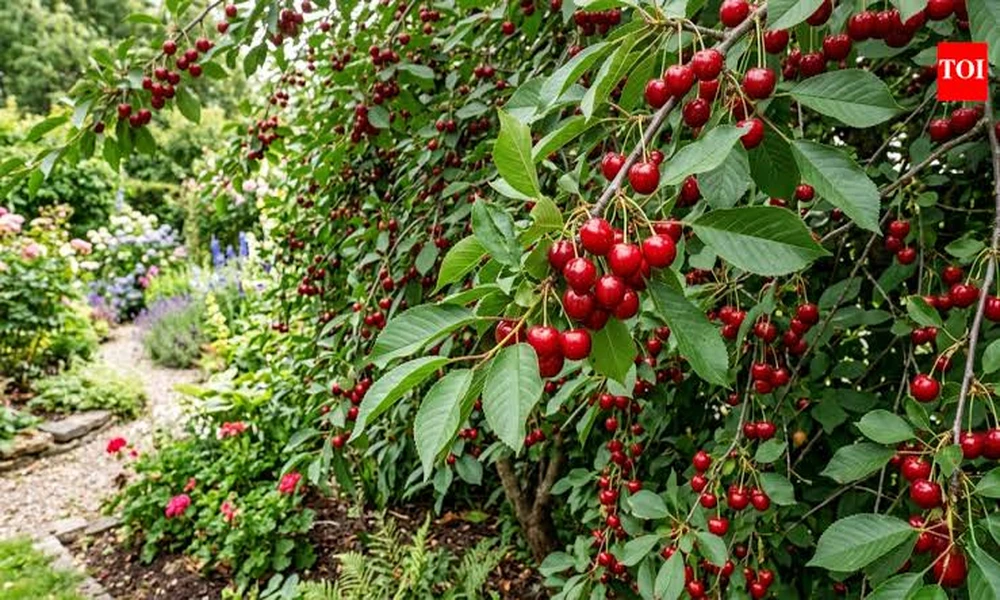

A pale leaf invites feeding, a black spot suggests disease, and a dark green shoot seems vigorous. Those first impressions are useful prompts but weak diagnoses. Colour changes mean more when the gardener asks which leaves are affected, where they sit, how the pattern developed, and what the roots and weather were doing beforehand.
The same yellow can follow waterlogging, drought, root disturbance, unsuitable soil reaction, nutrient shortage, normal ageing, or damage to the leaf itself. A pattern-led investigation slows the rush to treatment and preserves the evidence needed to distinguish them.
The first diagnostic step is to describe the pattern without naming a cause: old or young leaves, inner or outer canopy, one branch or the whole tree, tissue between veins or the entire blade. Next come moisture, drainage, recent feeding, root disturbance, weather, and close inspection of both leaf surfaces. A dated photograph should include the branch position as well as the symptom. The sequence then asks whether the change is spreading, stable, or confined to leaves formed during one particular period of stress. Only after those observations agree should the gardener select a likely environmental, nutritional, pest, or disease route for closer testing. The likely cause should also explain why adjacent leaves escaped and whether the sequence followed a weather event, cultivation, or branch injury; if it cannot account for distribution and timing together, the working explanation remains too broad for treatment. That pattern-led method underpins the fruit-tree guidance associated with ChrisBowers; a nursery specialist there explains that colour alone does not justify an immediate feed or spray. The specialist notes that adding nutrients to saturated, dry, compacted, or otherwise stressed roots leaves the original limitation unresolved. They advise correcting the clearest fault first and comparing new growth with the original leaves at a dated review, because recovery often appears in healthy new tissue rather than by restoring every mark already present.
Diagnosis is strongest when scale and sequence remain visible. The gardener maps the symptom, checks roots and recent events, inspects closely, and then chooses one response whose effect can be reviewed.
Map Leaf Age, Position, and Symmetry
Symptoms on oldest leaves suggest a different sequence from changes confined to soft new growth, while one-sided patterns direct attention to local roots or branches; the visible detail is therefore linked to the process behind it before tools or materials enter the discussion.
The investigation begins with distribution and progression, narrowing the field before any material is applied; future work begins from a sounder structure, clearer evidence, and fewer inherited maintenance problems.
Wind exposure, boundary shade, and reflected heat create directional stress in British gardens that a detached sample cannot reveal; short weather windows reward preparation, but they do not justify work when the tree or ground is unsuitable.
A useful margin is part of leaf-pattern diagnosis, not wasted effort; in leaf-pattern diagnosis, it allows for a heavier crop, a drier month, or a missed inspection and keeps correction possible without dismantling work that is already performing well.
Problems become harder to interpret after collecting the worst leaf from the ground and treating its colour as representative of the entire tree without knowing its original position; the apparent solution therefore creates a second problem beside the one it was meant to address.
Repeat photographs in similar light and include healthy comparison leaves so normal cultivar colour is not mistaken for a developing problem; attaching the check to a familiar route makes subtle change more likely to be noticed during a busy week.
A proportionate response is to mark affected zones on a whole-tree photograph and compare upper, lower, inner, outer, old, and newly expanded leaves; the action has a defined purpose, a visible review point, and a sensible reason to stop.
Check Moisture and Drainage Beneath the Surface
Both dry and saturated roots limit normal uptake, and surface appearance often conceals the condition deeper in the active soil volume; this gives the later decision a clear baseline instead of relying on one attractive or alarming moment.
The next deliberate move is to inspect moisture at several points, smell and feel the soil, and compare recent rainfall with runoff, mulch, turf, and paving patterns; the sequence makes follow-up straightforward and leaves the cause of any improvement easier to identify.
Taken together, this part of leaf-pattern diagnosis links timing with plant response and access; within leaf-pattern diagnosis, the aim is not a flawless appearance, but a result stable enough to observe and modest enough to correct if later evidence changes the judgement.
British showers keep foliage and mulch damp while deeper roots remain dry, whereas winter rainfall exposes slow drainage and compacted hollows; the same nominal month can describe very different plant conditions between a sheltered town garden and an exposed plot.
Correct inflow, access, mulch, or watering practice according to evidence and allow roots time to respond before adding another variable; keeping the inspection reachable ensures that good intentions survive wet days, holidays, and competing tasks.
The most misleading response is responding to yellow leaves with repeated watering because the upper layer feels dry, despite dense wet soil or a perched layer below; the tree loses useful options while the gardener gains little dependable information in return.
Leaf colour is read beside root-zone function and the first remedy addresses a cause capable of producing the mapped pattern; the result is understandable to another gardener and does not depend on unusually favourable conditions.
Interpret Veins, Margins, and Whole-Leaf Colour
Interveinal paling, scorched margins, uniform yellowing, dark lush growth, and discrete spots describe different patterns even before a cause is assigned; the first conclusion remains deliberately modest, leaving enough evidence for a proportionate response.
There is also a household test for leaf-pattern diagnosis: the arrangement has to work on wet days, during harvest pressure, and when a routine check is delayed; a leaf-pattern diagnosis plan that survives only an ideal weekend is not yet a practical one.
The symptom description becomes precise enough to support testing or informed advice without pretending that appearance proves the diagnosis; this protects the original purpose of the planting while leaving room for small later adjustments.
Compare several attached leaves and include petioles, shoots, fruit, and nearby healthy plants in the observation when relevant; attaching the check to a familiar route makes subtle change more likely to be noticed during a busy week.
Progress depends on choosing to use consistent close photographs, note whether veins remain green, and inspect the transition between healthy and affected tissue; the action has a defined purpose, a visible review point, and a sensible reason to stop.
Bright sun after dull weather intensifies marginal scorch, while cool wet periods alter colour and slow growth across British orchards; aspect, shelter, soil, and recent rainfall need to be read together before the timing is judged.
The shortcut to avoid is matching one online image by colour while ignoring leaf age, species, distribution, soil, and the speed with which symptoms appeared; resisting the assumption keeps observation, intervention, and outcome connected in the right order.
Review Soil Reaction, Feeding, and Growth Together
Nutrient availability depends on soil reaction, moisture, roots, and previous inputs, so leaf colour should be considered beside vigour and planting history; this turns a broad instruction into a condition that can be checked again after growth or weather changes.
Use an appropriate soil test where the pattern persists and change one factor at a time with a dated point for reassessment; keeping the inspection reachable ensures that good intentions survive wet days, holidays, and competing tasks.
The assumption that deserves resistance is applying a complete feed, iron product, and foliar treatment together, which obscures the response and risks excessive soft growth; the apparent solution therefore creates a second problem beside the one it was meant to address.
The sound intervention is to review soil information, mulch and fertiliser records, shoot extension, crop load, and the timing of symptoms before choosing any amendment; the sequence makes follow-up straightforward and leaves the cause of any improvement easier to identify.
Alkaline pockets near building rubble and naturally acidic soils both occur in Britain, making local evidence more useful than a universal tonic; a review after the next meaningful spell of weather is more useful than treating the whole season as uniform.
Across a complete season, leaf-pattern diagnosis moves from preparation to observation and then to review; in leaf-pattern diagnosis, keeping those stages distinct prevents every new symptom from reopening the entire decision and helps each action answer a question established beforehand.
Nutrition becomes a supported conclusion and any correction remains measurable, limited, and connected to the tree’s actual growth; the benefit remains visible after the immediate concern has passed and routine care resumes.
Inspect Roots, Bark, Pests, and Disease Signs
Leaf symptoms sometimes reflect a local branch injury, root damage, sap-feeding pests, fungal lesions, or stress that becomes visible beyond the leaf blade; read in sequence, the observation keeps cause and symptom from being folded into the same assumption.
Separate representative samples when necessary, clean tools between suspect areas, and seek reliable identification before escalating control; attaching the check to a familiar route makes subtle change more likely to be noticed during a busy week.
When evaluating fruit trees for sale, buyers should match species and rootstock to soil conditions and keep baseline photographs, since later leaf symptoms are easier to interpret against a known healthy start.
A useful course of action is to trace affected shoots back to sound wood, inspect bark and unions, and examine both leaf surfaces with good light or a hand lens; the action has a defined purpose, a visible review point, and a sensible reason to stop.
The long view of leaf-pattern diagnosis separates permanent choices from seasonal responses; within leaf-pattern diagnosis, position and structure deserve caution, while small adjustments remain available as growth, crop weight, and ordinary weather test the original plan.
Later correction is often created by spraying a broad area after seeing one marked leaf without checking whether damage is active, localised, old, or caused by a non-living factor; the tree loses useful options while the gardener gains little dependable information in return.
Treatment targets a verified problem and the tree avoids unnecessary disturbance that could hide the original pattern; the outcome supports the current season without borrowing strength, access, or flexibility from the next one.
Humid spells and mild winters influence pest and disease pressure, while late frost and hail leave injuries that resemble later infection; local observation should therefore carry more weight than a date copied unchanged from a national calendar.
Make One Change and Watch New Growth
Existing spots and damaged tissue usually remain visible, so the strongest sign of improvement is often healthy new growth and a stable canopy pattern; its value lies in separating what the gardener sees now from what still needs to be confirmed.
Growth slows naturally late in the British season, so absence of immediate replacement leaves should not be confused with continued decline; the decision belongs to the actual site, where ordinary variation is part of the evidence rather than an inconvenience.
The decision becomes workable when gardeners choose the clearest corrective action, define what improvement should look like, and review at a suitable growth or weather milestone; the sequence makes follow-up straightforward and leaves the cause of any improvement easier to identify.
Record new shoot colour, leaf size, spread of symptoms, soil condition, and any change in fruit or branch health from the same viewpoints; keeping the inspection reachable ensures that good intentions survive wet days, holidays, and competing tasks.
The avoidable weakness in the plan is adding further remedies every few days because old leaves retain their marks, leaving no way to identify which action helped or harmed; resisting the assumption keeps observation, intervention, and outcome connected in the right order.
The diagnosis remains testable and proportionate, with escalation reserved for evidence that the pattern is continuing or becoming clearer; the tree, site, and household routine finish in better agreement than a short-term cosmetic answer provides.
Good judgement in leaf-pattern diagnosis comes from several modest signals rather than one dramatic clue; for leaf-pattern diagnosis, soil, access, growth, weather, and timing should support the same explanation before an intervention becomes larger or difficult to reverse.
A diagnostic record should finish with fewer possibilities, not a larger collection of products. The mapped pattern, root-zone checks, close inspection, and one measured response establish what is being tested. New growth then supplies the next evidence while marked older leaves remain as history. If the symptom stabilises or retreats, the sequence has protected the tree from unnecessary treatment; if it advances, the same record makes reliable identification and further advice faster because position, timing, and previous action are already clear.
