
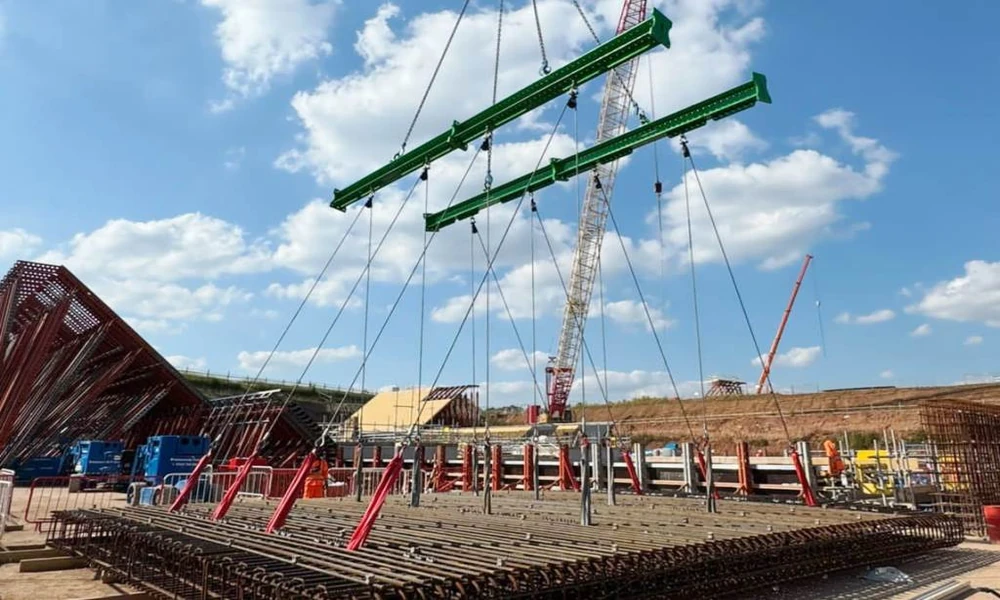

Moving big or strangely shaped goods necessitates meticulous planning, particularly when a single lifting point cannot offer sufficient stability. Weight distribution, balance, and load management during movement can all be aided by several lifting points. Nevertheless, a lift is not always safe simply because several slings are attached. Before the operation starts, the lifting points, equipment, load capacity, and operating circumstances must all be taken into account. Accidents and equipment damage can be avoided by being aware of these fundamental needs.
Determining the right lifting arrangement begins with understanding the characteristics of the load and the forces that may act on each connection point. Factors such as load dimensions, centre of gravity, attachment strength, sling angles, and the planned lifting path should be reviewed before equipment is connected. Following a structured approach to Require Multiple Lifting Points Guide can help ensure that multiple lifting points are selected and used appropriately, supporting better load control and reducing avoidable risks during material handling operations.
2. ASSESS THE LOAD FIRST
Examine the load thoroughly before choosing a lifting arrangement. How it should be lifted depends on its weight, size, form, centre of gravity, and structural strength. Multiple support points may be necessary for long beams, huge machinery, frames, tanks, and other unevenly weighted things. To avoid bending or undue stress, a load that is flexible or readily damaged may also require extra support.
Check Lifting Point Capacity
Each lifting point needs to be able to manage the pressures applied to it. The connection point should be appropriate for the anticipated lifting direction, and the rated capacity should be determined before the lift starts. Employees should never believe that just because an attachment looks sturdy, it is safe. Capacity should be calculated using manufacturer data, technical standards, or authorised lifting plans.
3. CONSIDER LOAD DISTRIBUTION
Only when the load is well balanced may several lifting points be helpful. Particularly when the centre of gravity is off, weight is not always dispersed equally among attachment sites. The forces exerted on separate components can also be altered via sling angles. Therefore, it is important to design the lifting arrangement such that no point, sling, or link is inadvertently overloaded.
4. SELECT COMPATIBLE EQUIPMENT
Lifting accessories such as spreader beams, slings, shackles, and hooks must be appropriate for the weight and lifting configuration. A suitable operating load limit and an inspection before operation are essential for equipment. It is not advisable to utilise lifting attachments that are worn out, damaged, deformed, or unknown. An inappropriate connection might become a weak spot; thus, compatibility between the lifting equipment and attachment locations is equally crucial.
5. PLAN THE LIFT PROPERLY
Before connecting equipment, a multiple-point lift should be devised. It is important to take into account the landing spot, communication methods, weather, ground conditions, surrounding obstructions, and lifting path. Workers should create a confined area surrounding the work and stay away from hung loads.
6. CONCLUSION
When managing heavy loads, having several lifting points helps improve stability and weight distribution. Understanding the load, verifying attachment capabilities, choosing appropriate equipment, taking sling angles into account, and carefully planning the entire process are all necessary for their safe use. Multiple-point lifting may be made more controllable, predictable, and safe by employing qualified workers and according to established protocols.
