
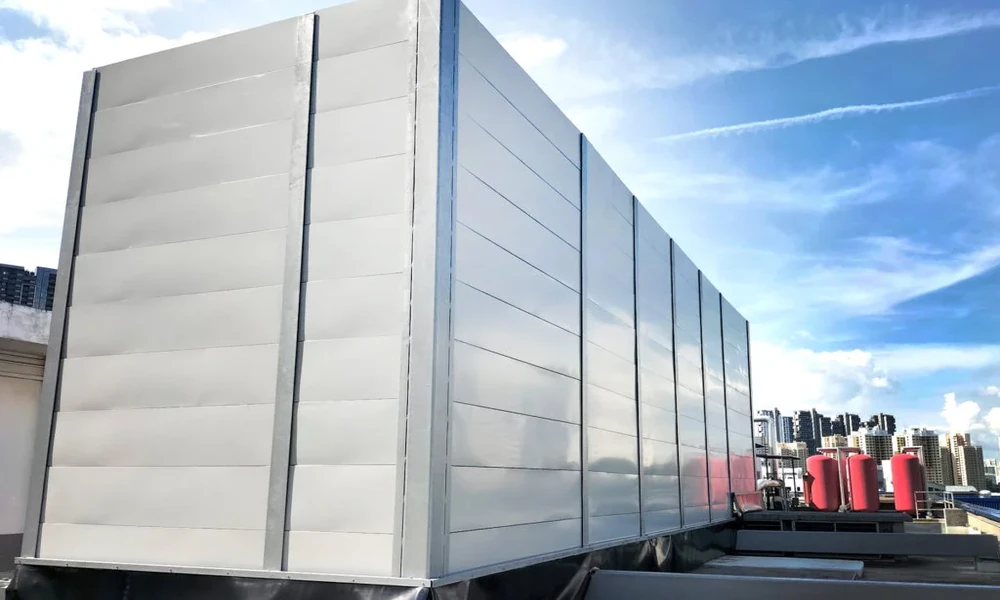

Noise barrier sheets are widely used on construction sites, infrastructure projects, and industrial worksites to help manage noise levels and minimise disruption to nearby residents and businesses. They are relatively easy to install, adaptable to changing site conditions, and can play an important role in supporting noise compliance efforts.
However, simply installing noise absorbing sheets does not guarantee effective noise control. In many cases, contractors invest in noise mitigation measures only to find that noise levels remain higher than expected. The issue is often not the product itself, but how it is being used on site.
Understanding the most common mistakes can help project teams get better results from their noise control measures while avoiding unnecessary complaints and compliance issues.
Treating Noise Barrier Sheets as a Complete Solution
One of the most common mistakes is assuming that noise barrier sheets alone will solve all noise-related challenges.
While they can significantly reduce noise transmission, they work best as part of a broader noise management strategy. Construction activities such as piling, demolition, cutting, and drilling can generate substantial noise levels, and barrier sheets can only control part of that impact.
Experienced contractors combine barrier sheets with other measures, including:
- Proper equipment maintenance
- Strategic work scheduling
- Quieter machinery where available
- Temporary enclosures around particularly noisy equipment
When barrier sheets are treated as one component of a layered approach, they tend to deliver much better results.
Installing Them Too Far from the Noise Source
Placement is one of the most important factors affecting performance.
A common assumption is that noise barrier sheets should always be placed around the perimeter of a site. While perimeter installations can help protect surrounding areas, they are not always the most effective location.
In many situations, placing barriers closer to the source of the noise produces better results. This helps intercept sound before it has a chance to spread across the site and beyond.
For example, surrounding a generator, compressor, or cutting station with properly installed noise barrier sheets can often achieve greater noise reduction than relying solely on perimeter barriers.
Leaving Gaps Between Barrier Sections
Sound behaves differently from physical objects. It does not require a large opening to pass through.
Small gaps between sheets, spaces around support structures, or openings at connection points can significantly reduce the effectiveness of a noise barrier system.
Unfortunately, these gaps are common on busy sites where barriers may be installed quickly or moved frequently.
To maximise performance:
- Overlap barrier sections where possible
- Ensure panels are securely connected
- Check for openings around corners and edges
- Inspect installations regularly as site conditions change
Even relatively minor gaps can create sound leakage that undermines the overall system.
Ignoring Gaps at Ground Level
Another frequent issue is the gap between the bottom of the barrier sheet and the ground.
If sound can travel underneath the barrier, a substantial portion of its effectiveness may be lost. This is particularly relevant on uneven surfaces where maintaining consistent ground contact can be challenging.
Contractors often focus on barrier height while overlooking what happens at the base.
Where practical, barrier sheets should be positioned as close to ground level as possible to minimise sound leakage underneath.
Using Barriers That Are Too Low
Height matters when it comes to noise control.
For a barrier to work effectively, it should interrupt the direct path between the noise source and the surrounding area. If the barrier is too low, sound waves can easily travel over the top.
This issue frequently occurs when site conditions change but barrier configurations remain the same.
As work progresses, equipment positions may shift, machinery heights may vary, and different activities may generate noise from different elevations. Regular reviews help ensure that barrier height remains appropriate throughout the project
Failing to Adapt as the Project Changes
Construction sites are dynamic environments.
Activities that generate significant noise today may be located elsewhere next month. Yet it is surprisingly common for noise barrier sheets to remain in their original position long after site operations have changed.
Experienced contractors treat barriers as flexible tools rather than fixed installations. They assess noise risks throughout the project and adjust barrier placement accordingly.
This proactive approach often delivers better outcomes than simply installing barriers at the start and leaving them untouched.
Poor Maintenance and Damage Management
Noise barrier sheets are exposed to weather, site traffic, equipment movement, and general wear and tear.
Over time, tears, loose fixings, damaged sections, or sagging materials can reduce their effectiveness.
Because damage may develop gradually, it is not always immediately noticeable. However, even relatively small defects can affect performance.
Regular inspections should form part of routine site management. Identifying and repairing damaged sections promptly helps maintain consistent noise control throughout the project.
Overlooking Reflected Sound
Many people focus solely on blocking direct sound transmission, but reflected sound can also be an issue.
In confined spaces or sites surrounded by hard surfaces, noise can bounce off nearby buildings, walls, and structures before reaching sensitive areas.
In these situations, barrier placement should account for potential reflection paths rather than just the most obvious direct route.
Considering how sound travels throughout the site often leads to more effective barrier positioning.
Neglecting Noise Monitoring
Without monitoring, it can be difficult to know whether noise barrier sheets are performing as expected.
Some contractors assume that because barriers are installed, compliance risks have been addressed. In reality, site conditions, weather, equipment usage, and work activities can all influence noise levels.
Regular monitoring allows teams to:
- Identify problem areas early
- Verify the effectiveness of existing controls
- Adjust barrier placement when needed
- Demonstrate a proactive approach to compliance
Monitoring provides valuable feedback that helps improve overall noise management.
Prioritising Convenience Over Performance
Construction projects often face pressure from deadlines, logistics, and space constraints. As a result, barriers may sometimes be placed where they are easiest to install rather than where they are most effective.
While convenience is understandable, it should not come at the expense of performance.
A slightly more challenging installation that properly blocks a noise path may provide substantially better results than a convenient placement that leaves key areas exposed.
Taking the time to evaluate positioning carefully often pays off in reduced complaints and improved compliance outcomes.
Final Thoughts
Noise barrier sheets can be highly effective when used correctly, but their performance depends on much more than simply putting them up around a site.
Mistakes such as poor placement, gaps in coverage, inadequate height, lack of maintenance, and failure to adapt to changing site conditions can all reduce their effectiveness. In many cases, these issues are entirely preventable with proper planning and regular review.
The most successful contractors understand that noise control is an ongoing process rather than a one-time installation. By using noise barrier sheets strategically and integrating them into a broader noise management plan, sites can achieve better compliance, minimise disruption, and maintain stronger relationships with surrounding communities.
