
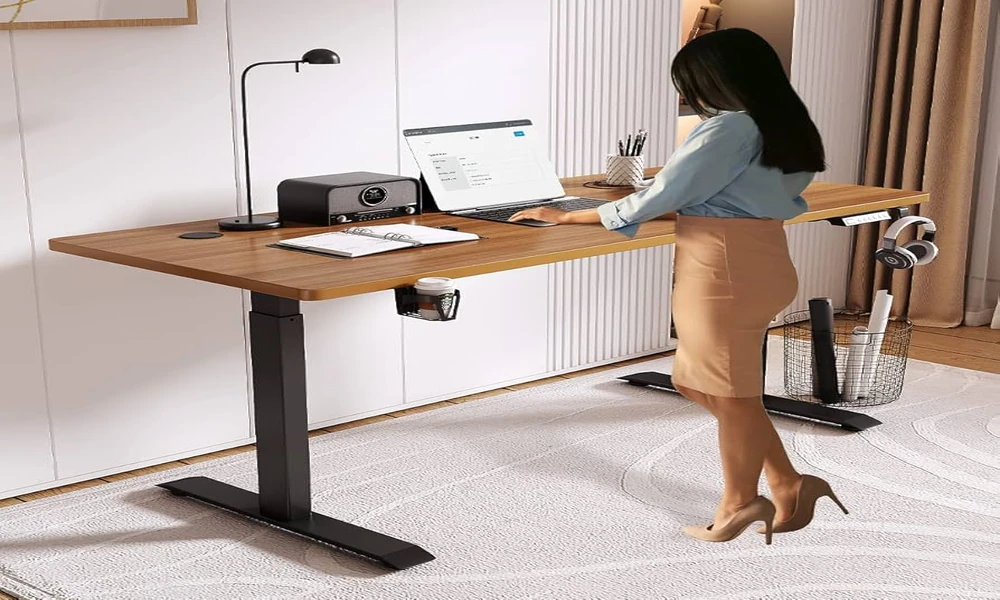

An ergonomic height adjustable desk changes the fundamental condition of desk work: instead of the worker adapting their body to a fixed desk height for eight hours, the desk adapts to the worker’s body and working posture across the day. The ability to shift between seated and standing positions – typically two to four times across a working day – reduces the metabolic and musculoskeletal costs of sustained static sitting. For workers who spend most of their day at a workstation, a height adjustable desk is among the most direct health interventions available without leaving the office.
The Case for Standing Periods
Prolonged static sitting has well-documented associations with musculoskeletal discomfort in the lower back, neck, and shoulders. The disc pressure in the lumbar spine is higher in a seated posture than standing. The postural muscles that maintain spinal alignment fatigue over sustained sitting, producing the slumped position that accelerates lumbar disc loading.
Brief standing periods – fifteen to twenty minutes of standing in each hour of desk work, reduce cumulative disc pressure and activate the postural muscles that sustained sitting allows to disengage. An ergonomic height adjustable desk makes these transitions effortless. A user who can raise and lower the desk in seconds is more likely to do so regularly than one who must manually adjust a complex mechanism.
Electric vs Manual Height Adjustment
Height adjustable desks in Singapore are available with electric or manual adjustment mechanisms.
Electric desks adjust with a button press, typically moving between height presets programmed by the user. The adjustment is smooth and takes ten to fifteen seconds. Electric adjustment encourages frequent transitions because the barrier to changing is minimal.
Manual crank desks require the user to turn a handle to adjust the height. The process is slower and requires more effort, which reduces the frequency of transitions. For users committed to regular height changes, manual desks work. For users who need the minimum friction to build the sitting-standing habit, electric adjustment is more effective.
Desk Dimensions and Setup
An ergonomic height adjustable desk is only part of the complete workstation setup. The monitor height, keyboard position, and chair height must all be calibrated to the user’s body dimensions in both the seated and standing positions.
In the standing position, the keyboard and mouse should sit at a height that allows the elbows to be at approximately ninety degrees with the shoulders relaxed. The monitor should be at a distance that allows comfortable reading without forward head lean.
As Singapore’s Workplace Safety and Health Council notes in its ergonomic workstation guidance: “The desk is the platform for the rest of the workstation. Getting it right creates the foundation for proper ergonomic setup throughout.”
LCF Height Adjustable Desks
LCF’s ergonomic height adjustable desk range includes electric adjustment models with programmable height presets for Singapore offices and home offices. Their desks are available in standard and larger desktop sizes to accommodate different monitor and equipment configurations.
For Singapore desk workers looking to improve their workstation health setup with a height adjustable desk, LCF provides the ergonomic desk that makes standing work part of the daily working routine.
